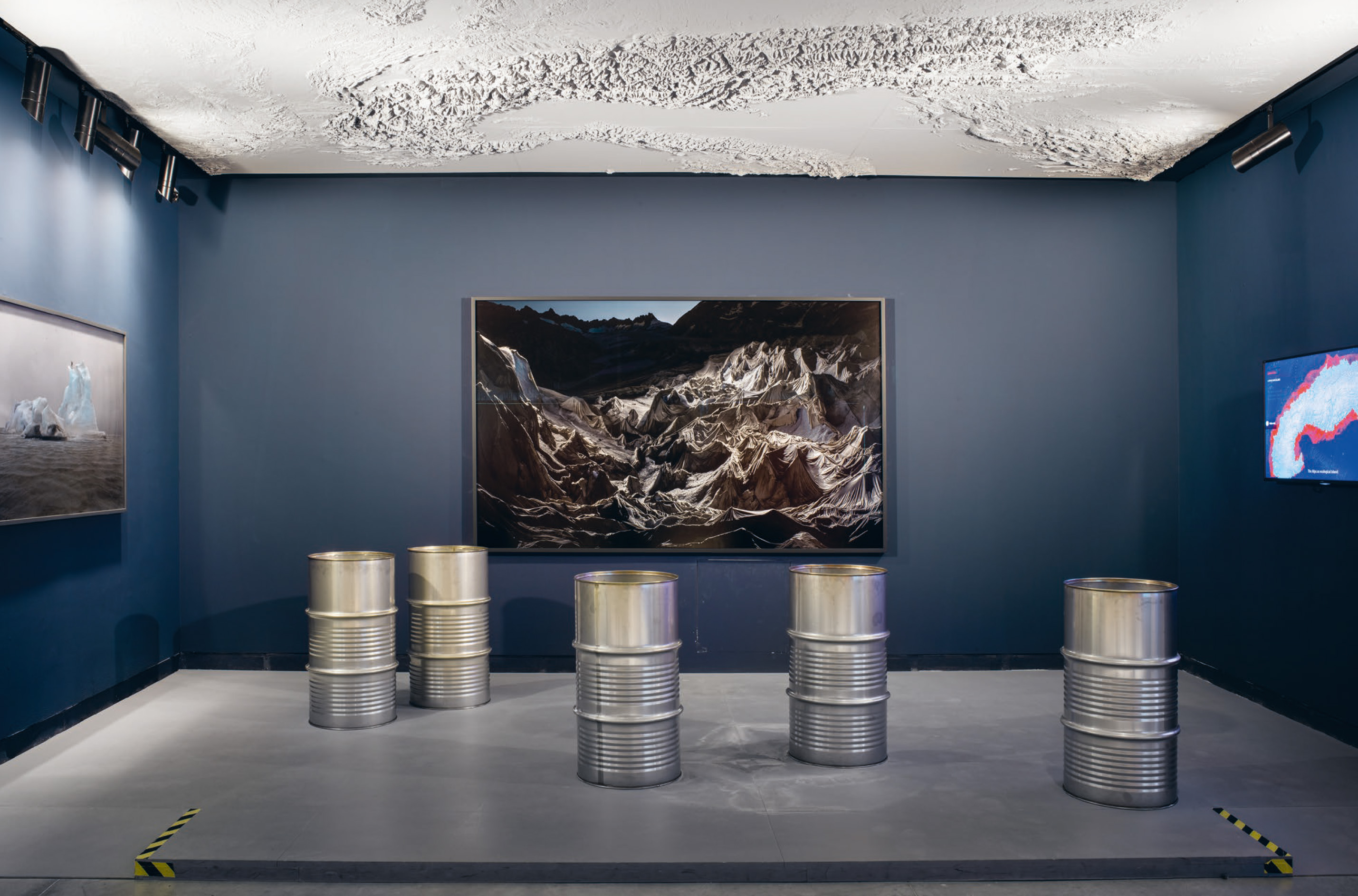
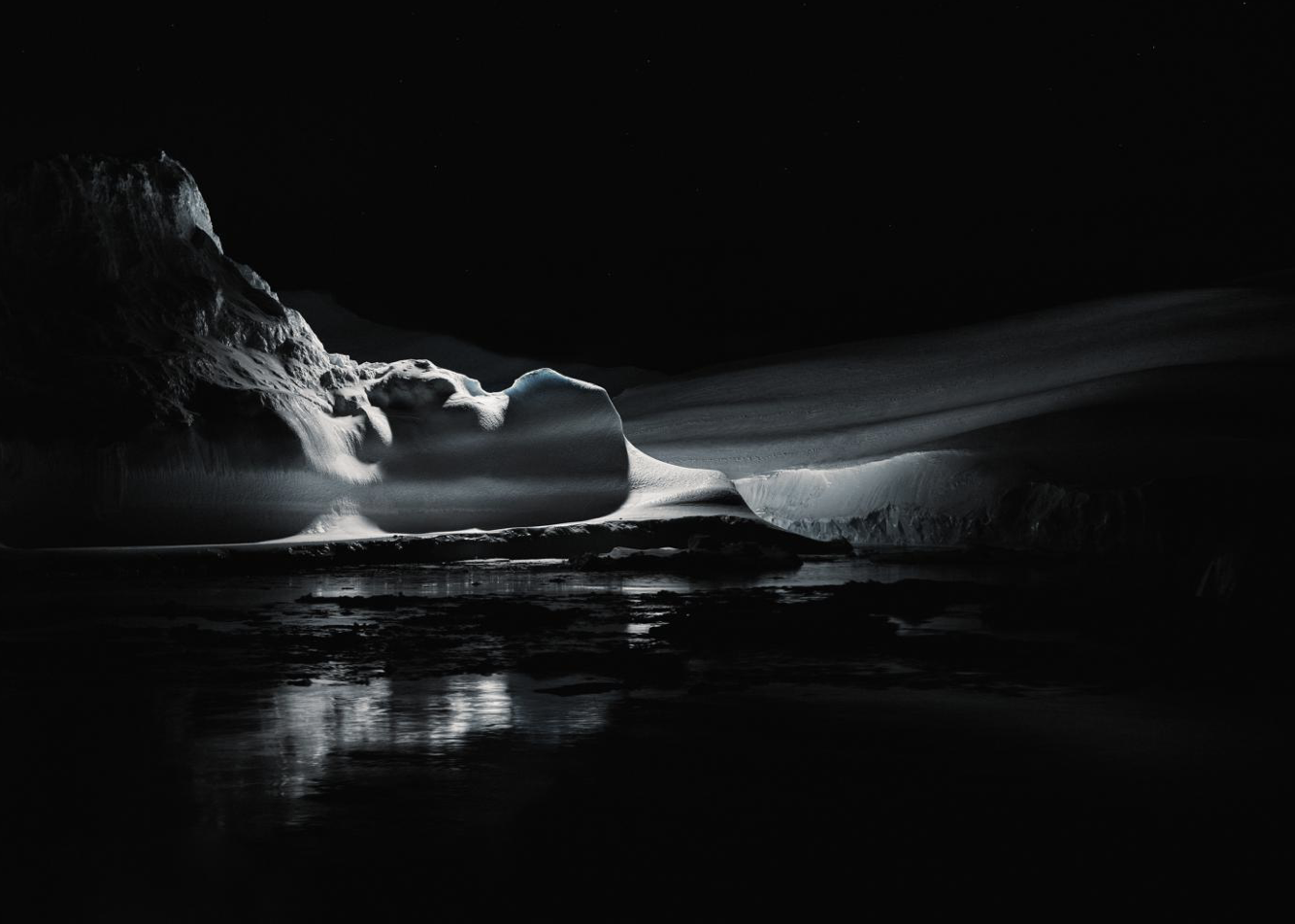
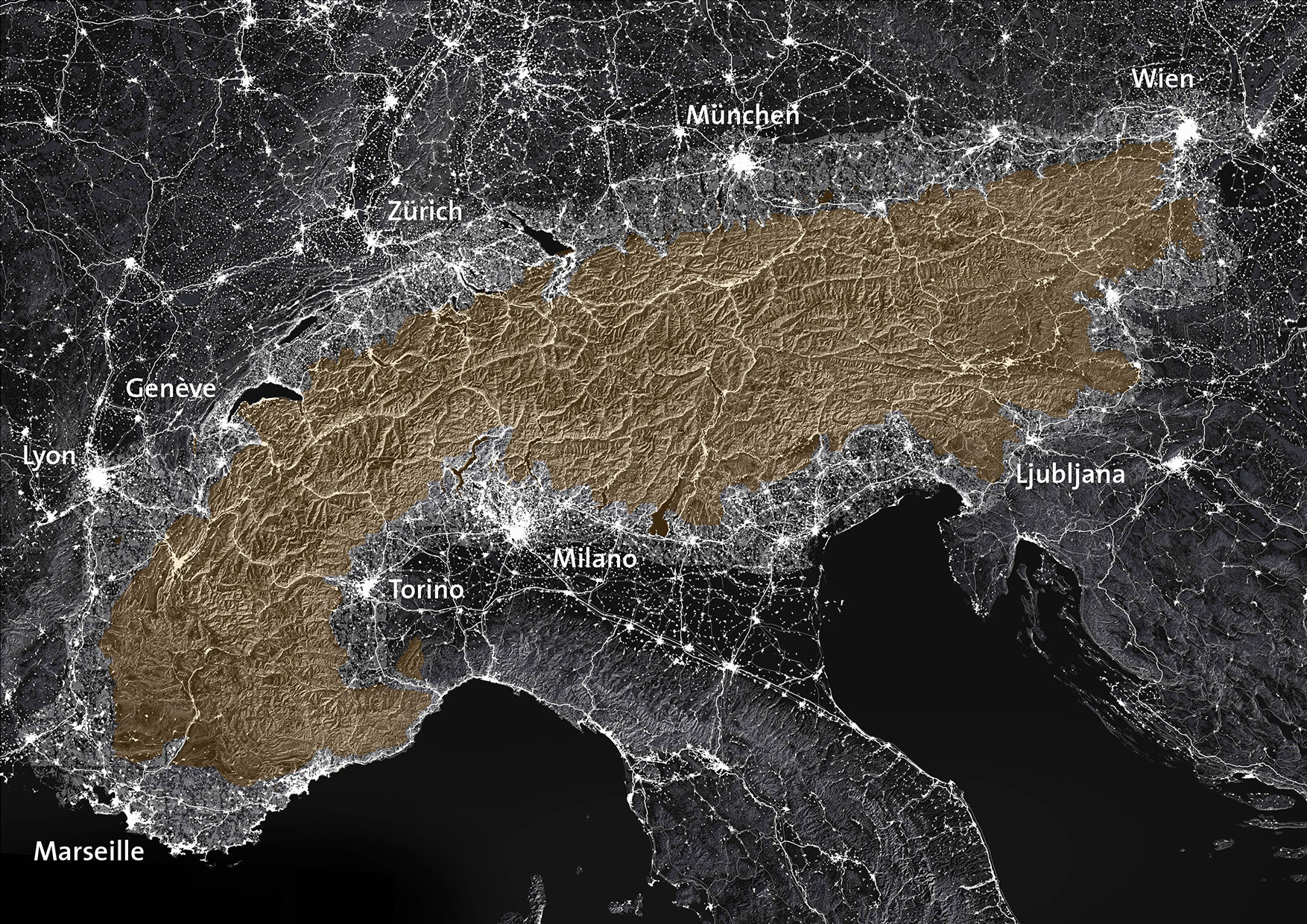
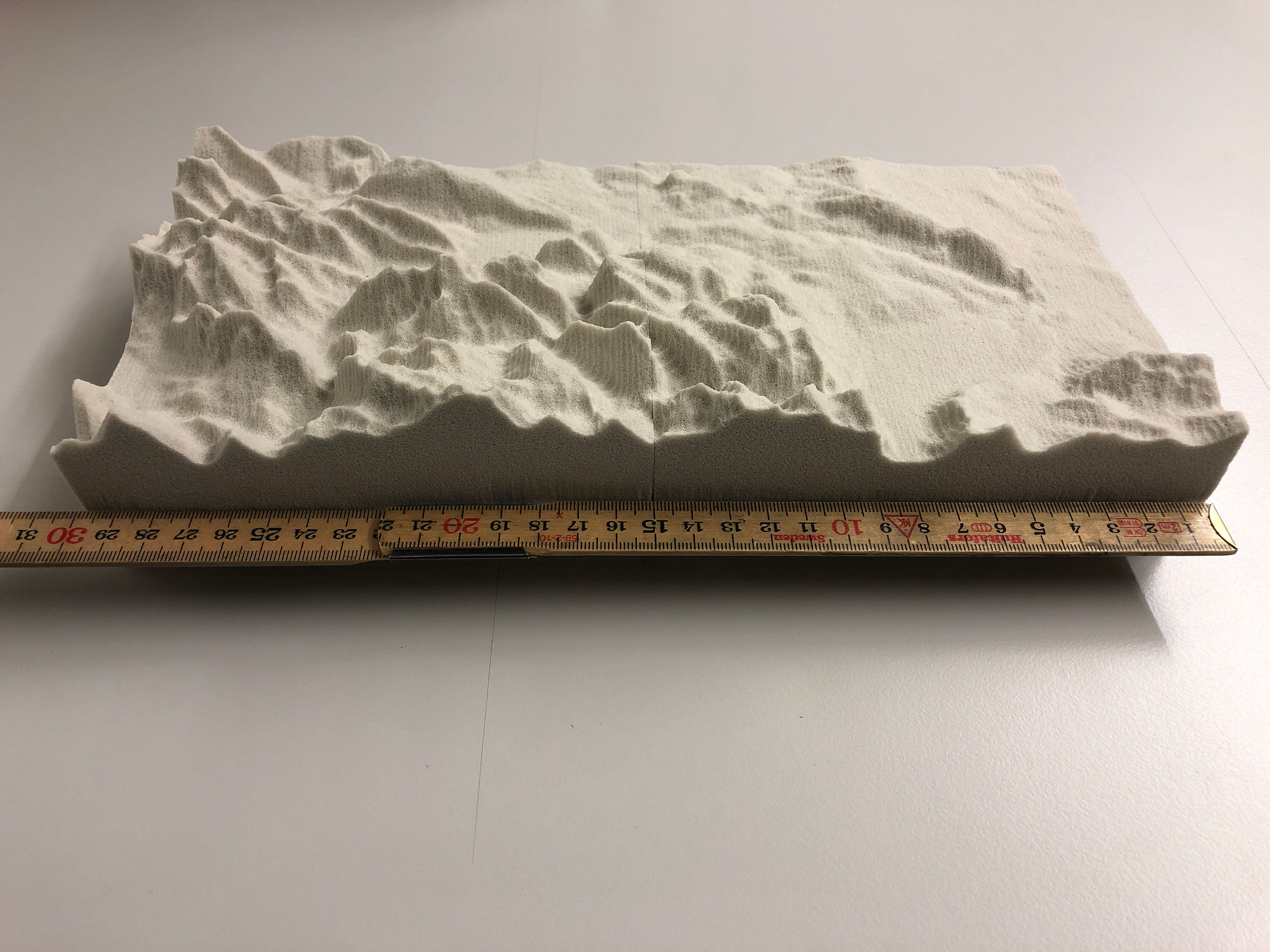
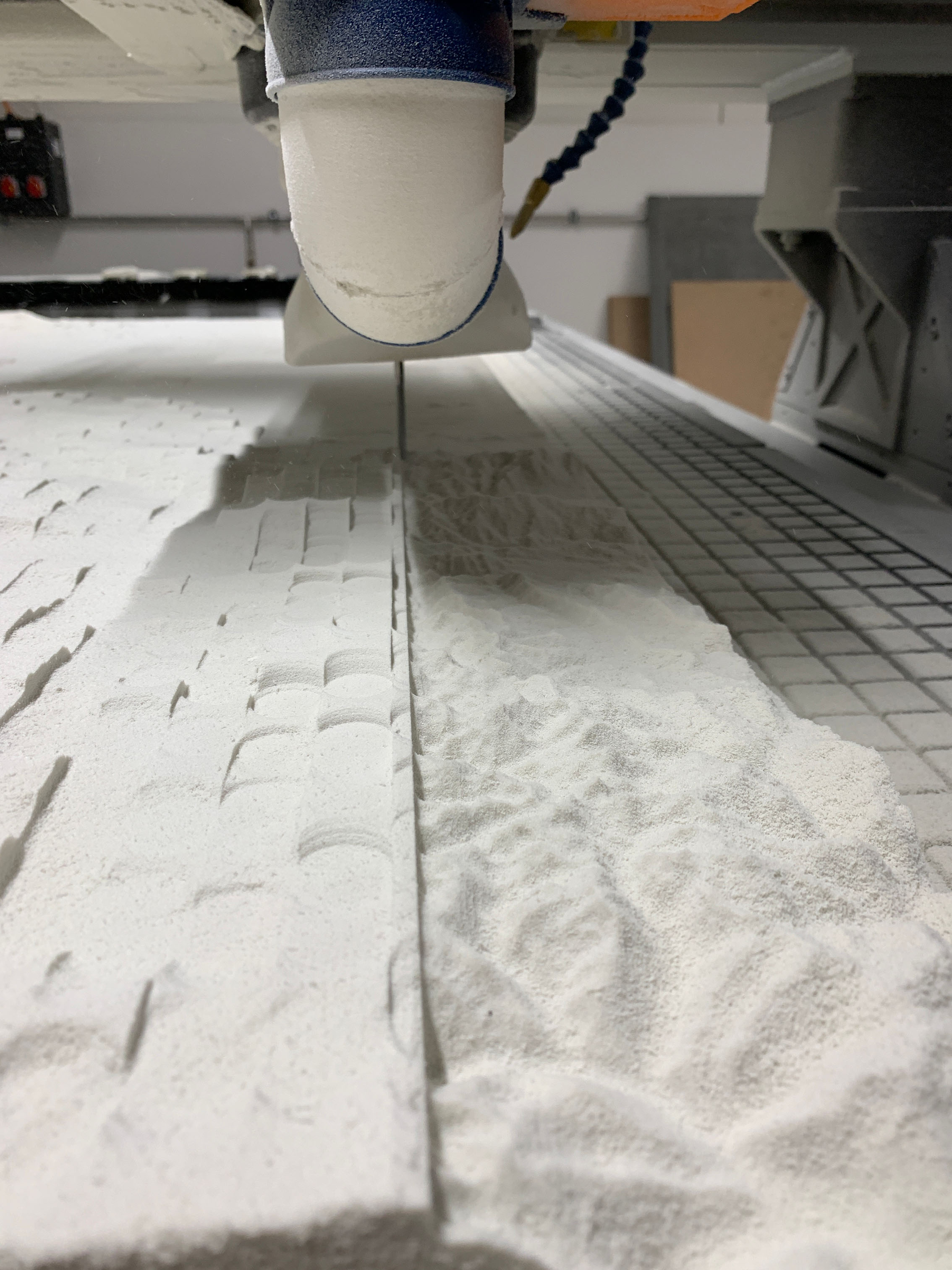
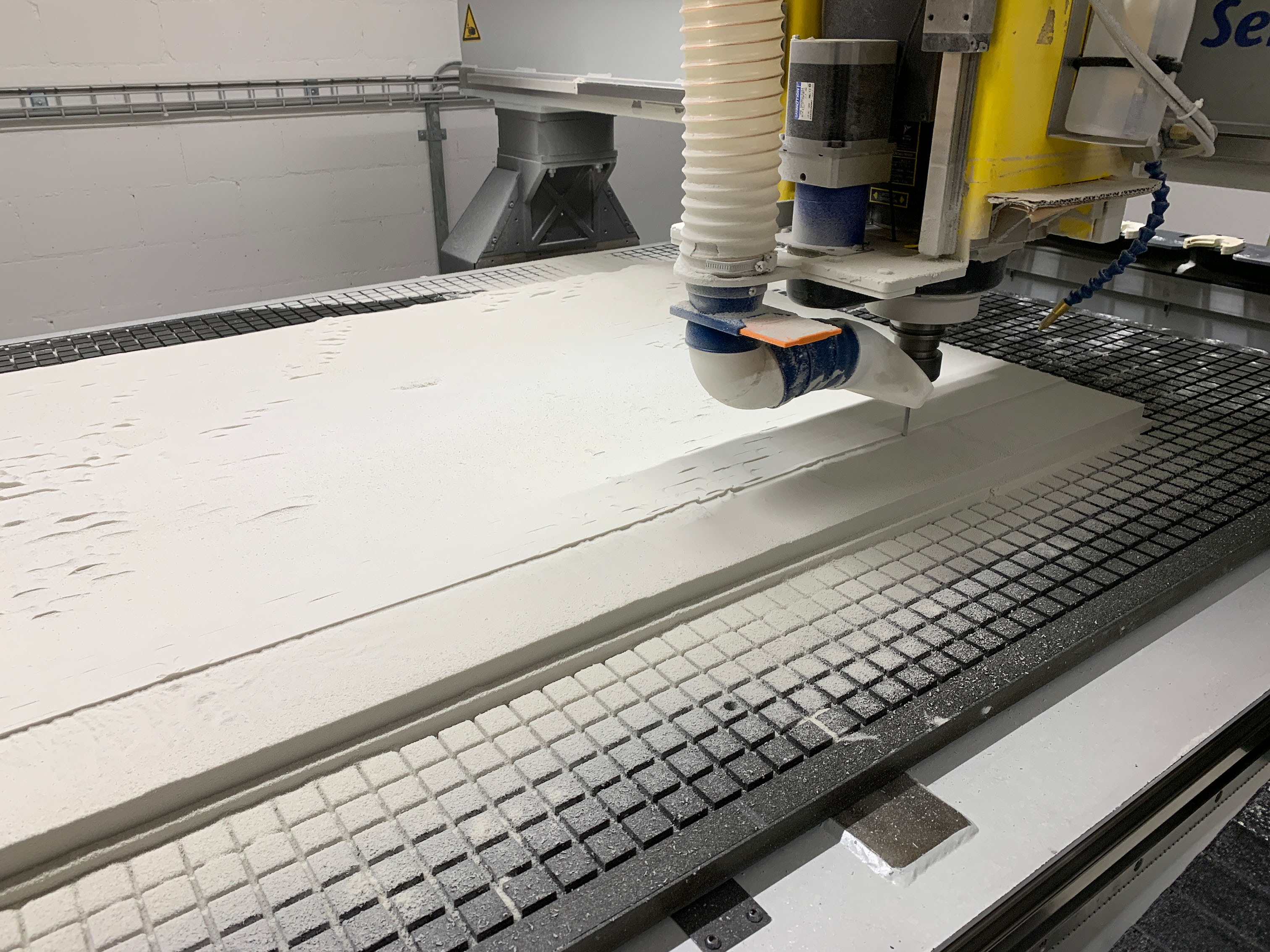
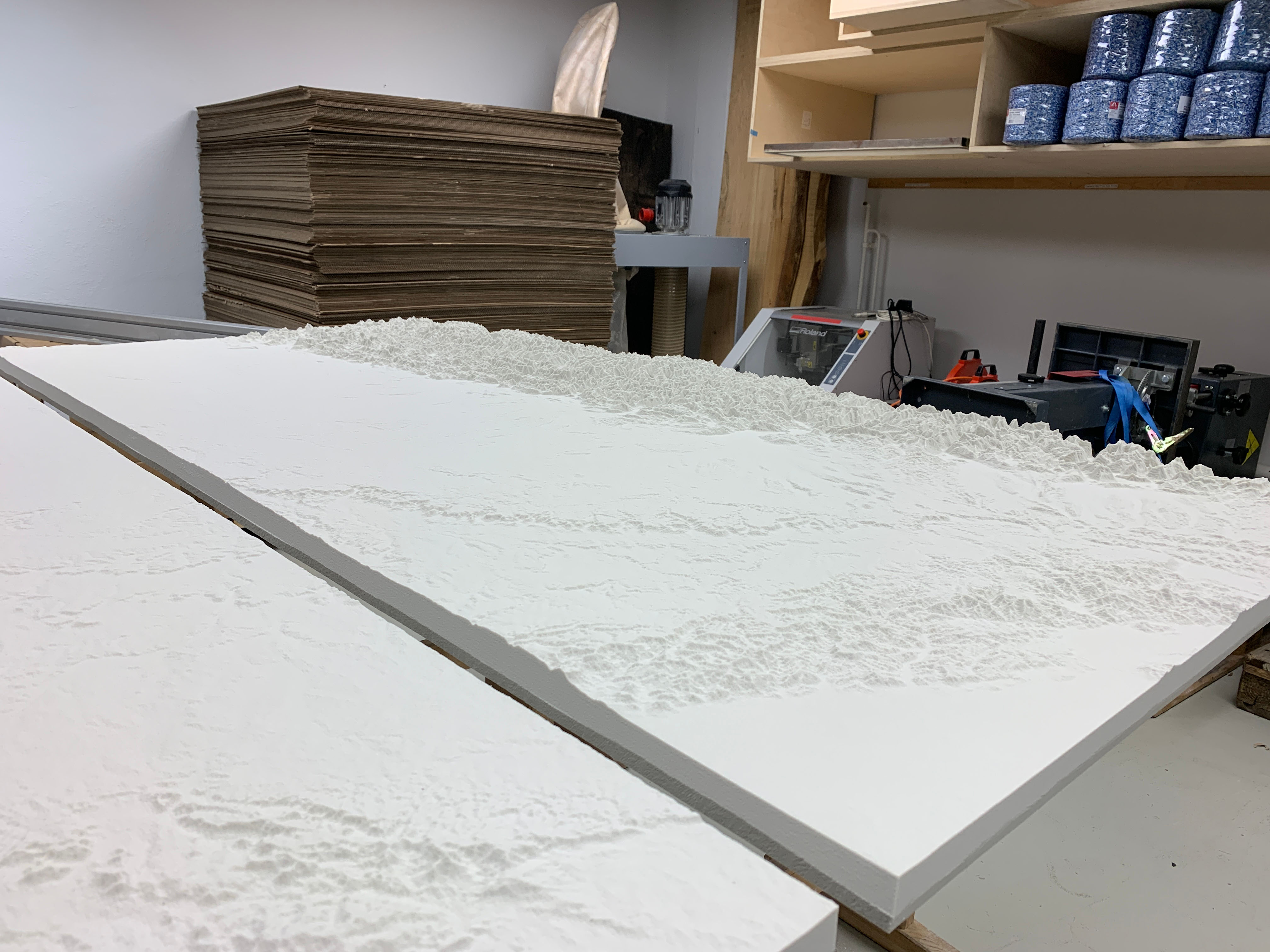
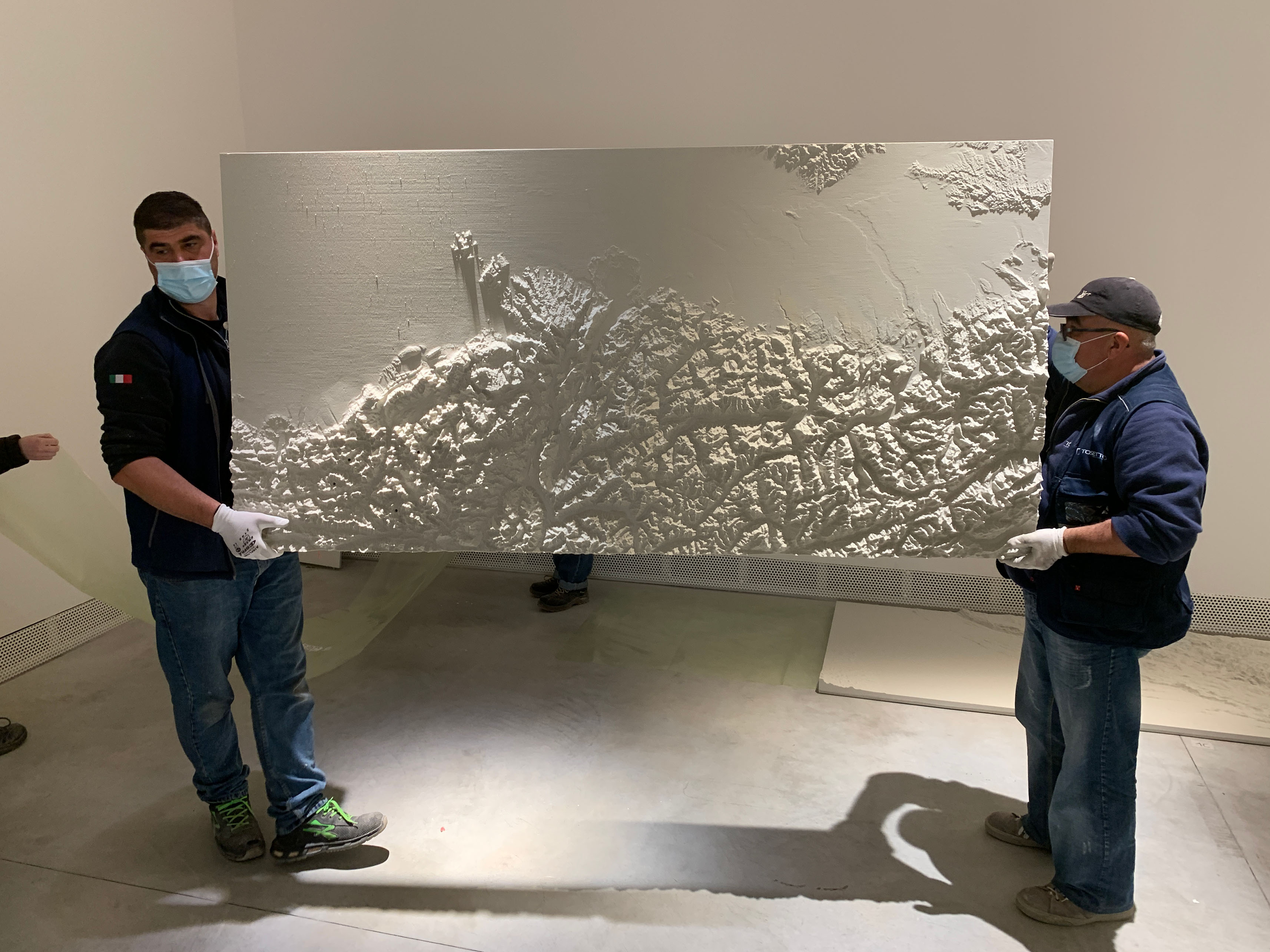
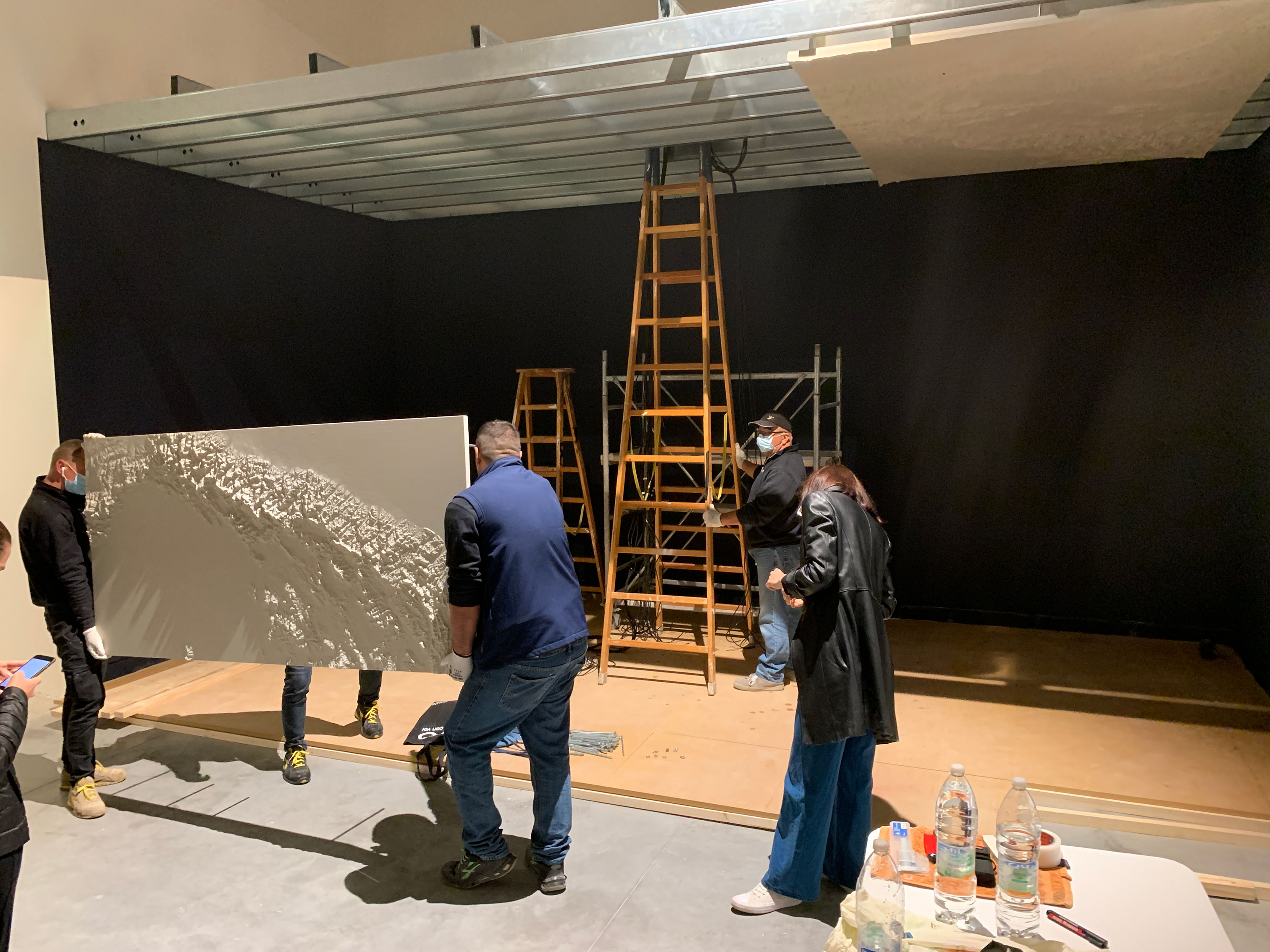
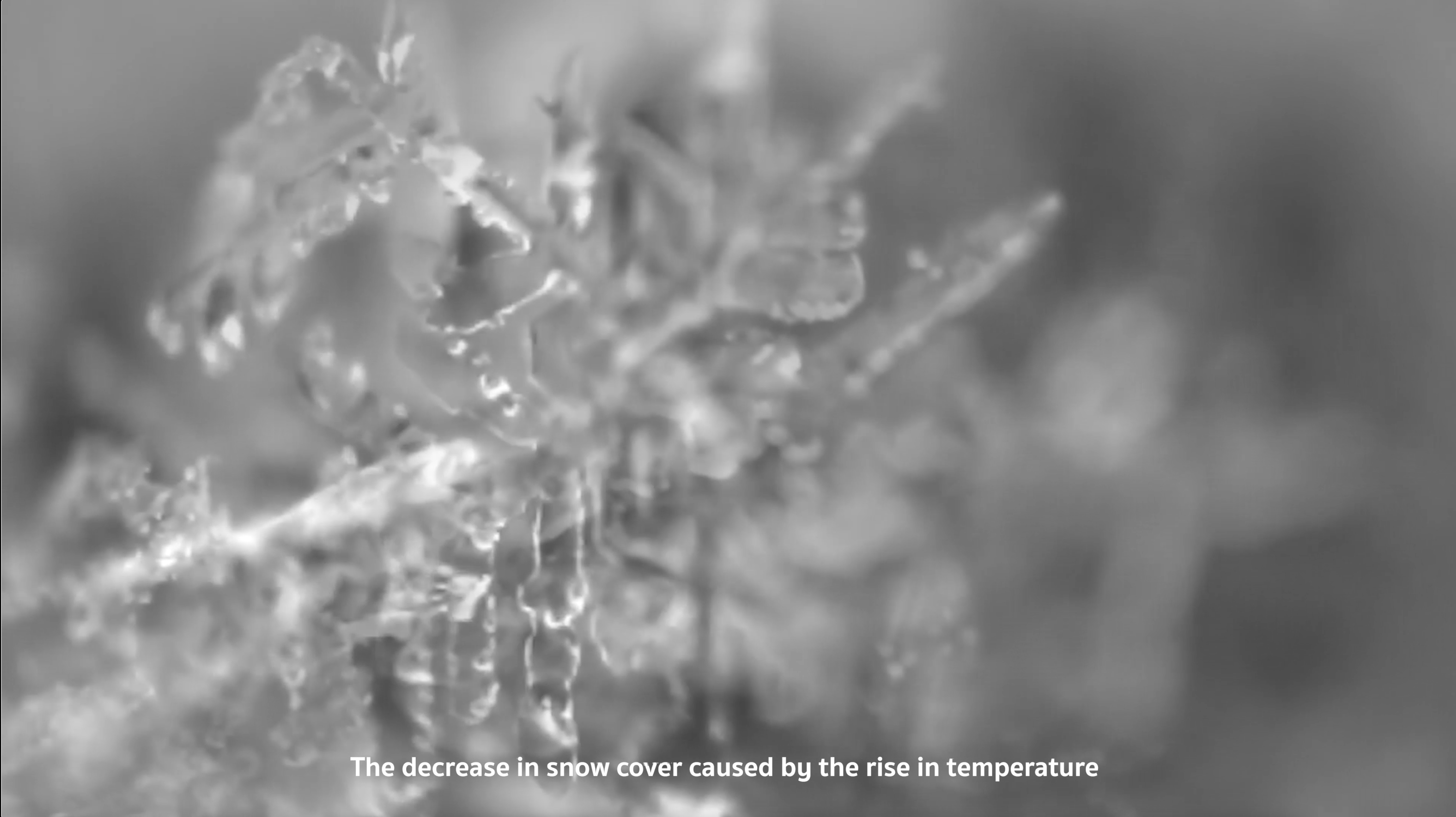
The Alpine space is much larger than a cursory glance at the relief would suggest. If we look at the water courses,this becomes quite evident. Water is indeed without form, smell, color, or taste. Yet, the element by no meanslacks specific properties. In fact, it is the basis of all life. The Alps have always been of utmost importance as a “water tower” ensuring the very existence of the surroundinglandscapes and cities. As a result of today’s rising temperatures, however, it is not only the melting of the glaciers that is, quite inexorably, progressing. The gradualdwindling of precipitationin the form of snow alsocauses the water balance to liquefy. As a result, the Alps can no longer entirely fulfil their function as CentralEurope’s water tower, especially in summer. However, they remain an important water supply for Central Europe. This contribution to the exhibition puts the complex probleminto a simple format. However, in order to understand the dependencies and interactions between precipitation,temperature, topography, etc. while, at the same time, focusing on the essentials, the respective information cannot simply be conveyed by means of a map or picture.Complementary forms of communication (from videos to photographs to physical models) are needed, which also reflect the approach taken in developing the contribution.
In a broad discourse between the disciplines of natural sciences, engineering, landscape architecture, and art, a proposal for a new reading of the Alps as an “ecological island” was developed. With a view to a larger reference space, i.e., Central and Southern Europe, not only existing uses are gaining in importance in the Alps, but new uses are emerging as well. Among them all, water plays an important role within the Alpine regions as a connecting element as – at least for now – an almost inexhaustible and qualitatively impeccable resource, as a supplier of energy and an attractive feature of landscape with a high ecological and touristic potential. The Alps as a hotspot of biodiversity, their favorable climatic conditions (summer-health resort) or their potential to create new forms of (urban) coexistences – all this and more constitutes the uniqueness of the Alps. In this context, the principles of interaction are crucial. The same as former agrarian societies in the Alpine region, actions should be guided by the principle of a sustainable use of resources. However, a responsible and careful use of the Alpine landscape cannot be guided by traditional ideas. New images and concepts shall have to be developed. Formless, odorless, colorless, tasteless – boundless? As a civil society, we shall have to come to an understanding about the meaning and value of the landscape. In doing so, a leap in scale shall have to be made. And this not only in terms of space, but also in terms of time. Alpine water in its various states vividly demonstrates this: from the immense volumes of water stored in the form of snow or ice for only a short time or for centuries, to water vapor stored in the atmosphere for a few days, to the streams and rivers that cover the long distances between mountains and valleys for hours or days or even several years (if interspersed with lakes), the water element permeates the manifold dimensions of the overall “landscape system.”




 Newsletter